Small Spaces
An Entry Drop Zone You Can Clear in One Pass
Give keys, bags, papers and returns separate landing places in a compact entry, then test how easily everything leaves again.
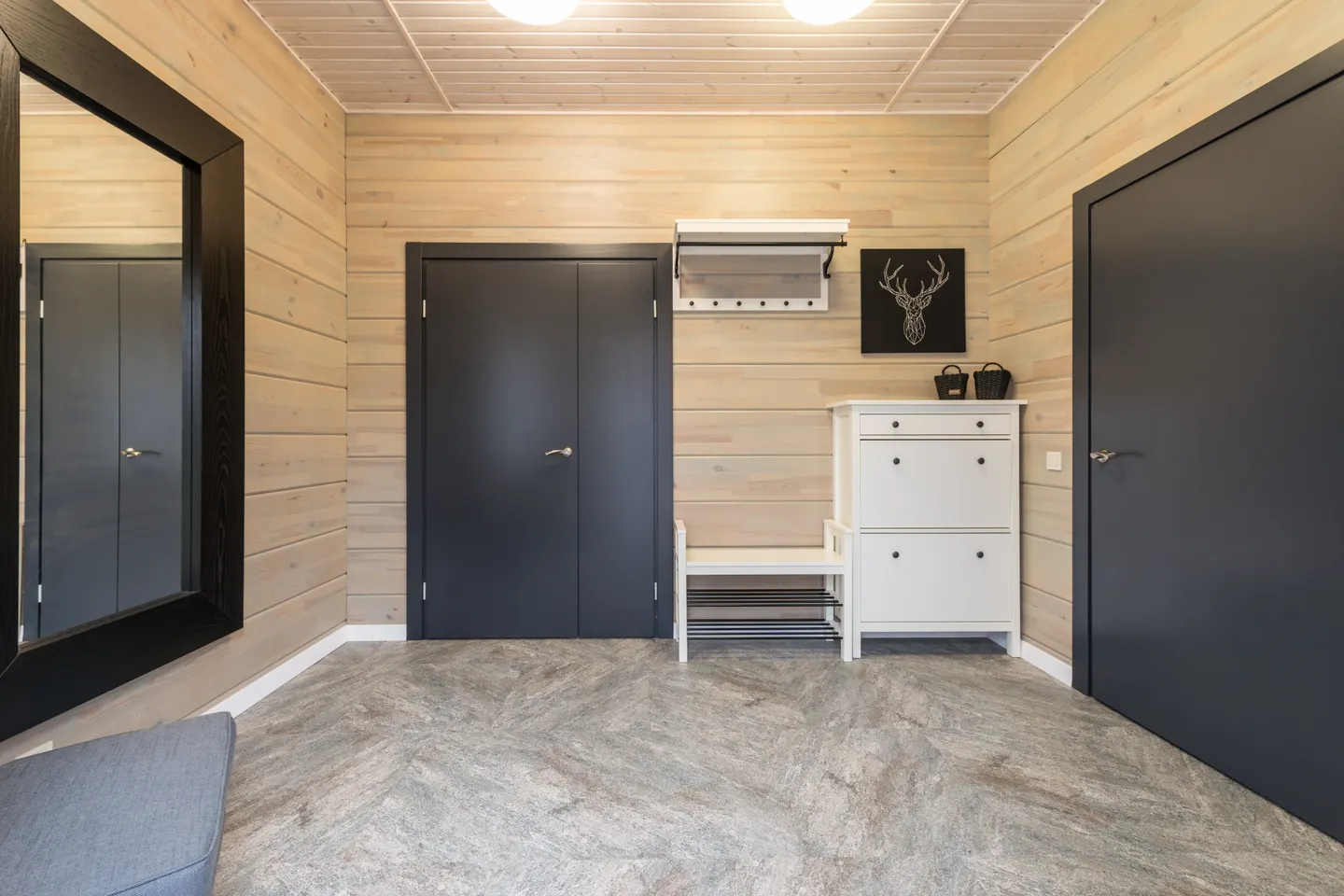
Take a photograph of the entry five minutes after everyone has come home. Then take the same picture on the way out the next morning. The difference is the work your entry does overnight. A good drop zone lets a wallet stop somewhere predictable, a lunch bag go on to the kitchen and a package wait for its next trip. It takes little floor area if each object has a reasonably direct route. In a small home, the limit that matters is often the amount of space one homeowner can clear in the time it takes to put the kettle on.
The exercise begins with what you actually carry. One person may set down a bicycle helmet, headphones and a tote. A family may have a stack of school forms, four wet gloves and supplies for tomorrow's small trip. It is tempting to buy a console with seventeen compartments before looking at the objects. The console eventually fills with the wrong things, and the useful ones return to the only flat spot near the door.
Draw an arrival route in three stops
Pick an evening when you can watch the entry. Notice where the door swings, where you are able to take your first free step, and where you naturally drop something if both hands are full. An entry with an interior corner immediately behind the front door is a different room with the door open. A shelf at waist height can be surprisingly intrusive if someone has to circle it every time they move a bag into the living room. Put empty boxes in place briefly to see the combined footprint, including the bag or coat itself.
Mark three positions if there is room: a spot where you can pause safely out of the opening, a reachable place for the smallest items, and a second station for what must go farther. In one home these can all be along one wall. In another, the transit shelf is on the kitchen side of a narrow hall. Keep the route clear and preserve access to outlets, panels, doors, air grilles and any required escape route. The plan only works if people can use the floor in normal conditions.
Think about where a visitor lands. If there is always a bag on the only flat surface, there may be nowhere for someone to put a helmet or gloves for a short stay. Make that empty landing the right size for a real object. A narrow tray for glasses is not an extra tabletop. A slim shelf with a folded bag hanging below it may work because the bag takes up less depth when not in use. Try it while carrying some bulky everyday objects.
Differentiate things by when they leave
Group what you keep in the entry according to its expected next move. The keys that will leave every day deserve separate space. Things that are only using the hall as temporary storage, such as returns and library books, benefit from a movable basket or tote. A form that takes a decision belongs where you make that decision. A narrow wall pocket can keep it visible until that evening, but is a poor filing system for six months of paperwork. Distinguish between direct routes and little errands that need a reminder.
Put the everyday items close enough to retrieve without looking at several levels. A shallow dish for wallet and keys lets you see both in one glance. A hook can hold keys if the usual key ring can reach it with gloves on. Consider whether small items could fall behind furniture. A deep dish can hide a tiny apartment fob under a hat, while a flat tray with a small lip keeps similar items visible. Do not make an open container the public home of sensitive documents or devices.
For temporary goods, choose a container whose capacity is a decision. If a parcel is too large for the tote, it can wait where there is some room to move around it, with the address label protected as needed. Ask which trip will get the item out and put a reminder near the bag or in your calendar. The entry gets crowded when it becomes a physical list of tasks no one has scheduled. The simplest fix can be one departure date rather than another shelf.
Give tall objects a secure, narrow footprint
Tall things can look slim in a drawing because they sit against a wall. In actual use they need a stable base, a place for water if wet, a way to remove them without knocking the next item, and clearance at the top. An umbrella stand or boot tray needs enough room for its rim and contents. Test the position of a long umbrella with the handle angled the way someone would actually leave it. If the stand sits next to a door handle, the two may make contact even when their footprints look separate on the floor.
Backpacks, shopping bags and helmets all change shape under load. A heavy pack can project farther forward than a light jacket. Place it on a freestanding fixture only if the fixture is suitable and stable under that load. If hooks are permitted, choose the attachment for the wall and anticipated weight, and check hidden services before fastening. Keep straps out of the route. A low hook can help a short person unload a bag, while a projecting hook at head height in a narrow passage may be uncomfortable for a taller person walking past.
Where floor area is scarce, go up only after testing reach. A tray on top of a tall cabinet may be easy to deposit into and hard to inspect when something goes missing. If someone has to stretch, climb or shift another piece to retrieve an item used every morning, move it lower. Less-used extras such as a seasonal scarf can sit above everyday items if it is safe to retrieve them there when needed.
Set up two exits for papers and small clutter
A folder on the entry shelf is useful when it has an exit. Put things requiring return or signature into one narrow slot. Take longer-term papers to a normal file area. A card you like can be propped at a shelf end for a while. A closed container for all paper hides the difference between these actions and fills with little chance to notice. Opaque storage has an advantage for private papers, so consider a small closable file that stays away from the doorway. Use an ordinary envelope to test the available dimensions before buying an organizer.
Create enough room to empty small containers completely. A shallow bowl of keys and odds and ends can be tipped onto a table, sorted, and returned. A wall cabinet needs a shelf that clears its hinge and is wide enough to wipe. Paper and grit collect below removable liners. If you cannot fit a cloth into the corner where an exposed shelf meets its side panel, choose fewer accessories or a different arrangement. The practical shelf has a few helpful divisions and a recognizable empty state.
When the entry is shared by two or more people, assign spaces by what makes retrieval easy. Some households keep separate dishes for wallets and keys. Others use one clearly divided tray so both people can notice when the spare key is missing. Let each person try the layout without instructions. If the tray's labels are needed on every arrival, the compartments may have more rules than the job requires. A shared spot for mail waiting to leave can remain in view even if personal storage is separate.
Let a seven-day trial show you what should stay
Try the setup with items you already own. Set a familiar dish in the proposed key position. Use a reusable tote for the outbound items and a mat or stand suited to wet things. Take the arrival and departure pictures again after a few days. A space that looks tidy after you have organized it may still fail during a rushed morning. Pay attention to the moment a person decides where a wet or heavy object should go. A more natural movement can make that decision almost automatic.
Look at what is left on the surface after the next exit. If the same few things collect in the same corner, that corner may be the proper location for a small container. If a shelf is repeatedly full of things that travel to the kitchen, make the landing point easier to empty or move it a step closer to where those things belong. If a coat now hangs neatly but its hem touches wet shoes, adjust one location before ordering additional parts.
Keep the cleaning job visible. A small entry should be able to go from arrival mess to clear route with one sweep of a hand and one trip to the next room. The test at the end of the week is whether you can leave holding your keys, return item and bag without looking for an object or asking someone else to move.
To preserve the new arrangement in winter, give gloves a ventilated landing and move the outbound tote slightly farther inside when the umbrella stand is in use. Treat the seasonal change as a small adjustment to the same route.