Decorating
Light a Dining Table From the Seats, Not the Ceiling
Choose a dining pendant by mocking up its light, shade and hanging height from the places people actually sit.
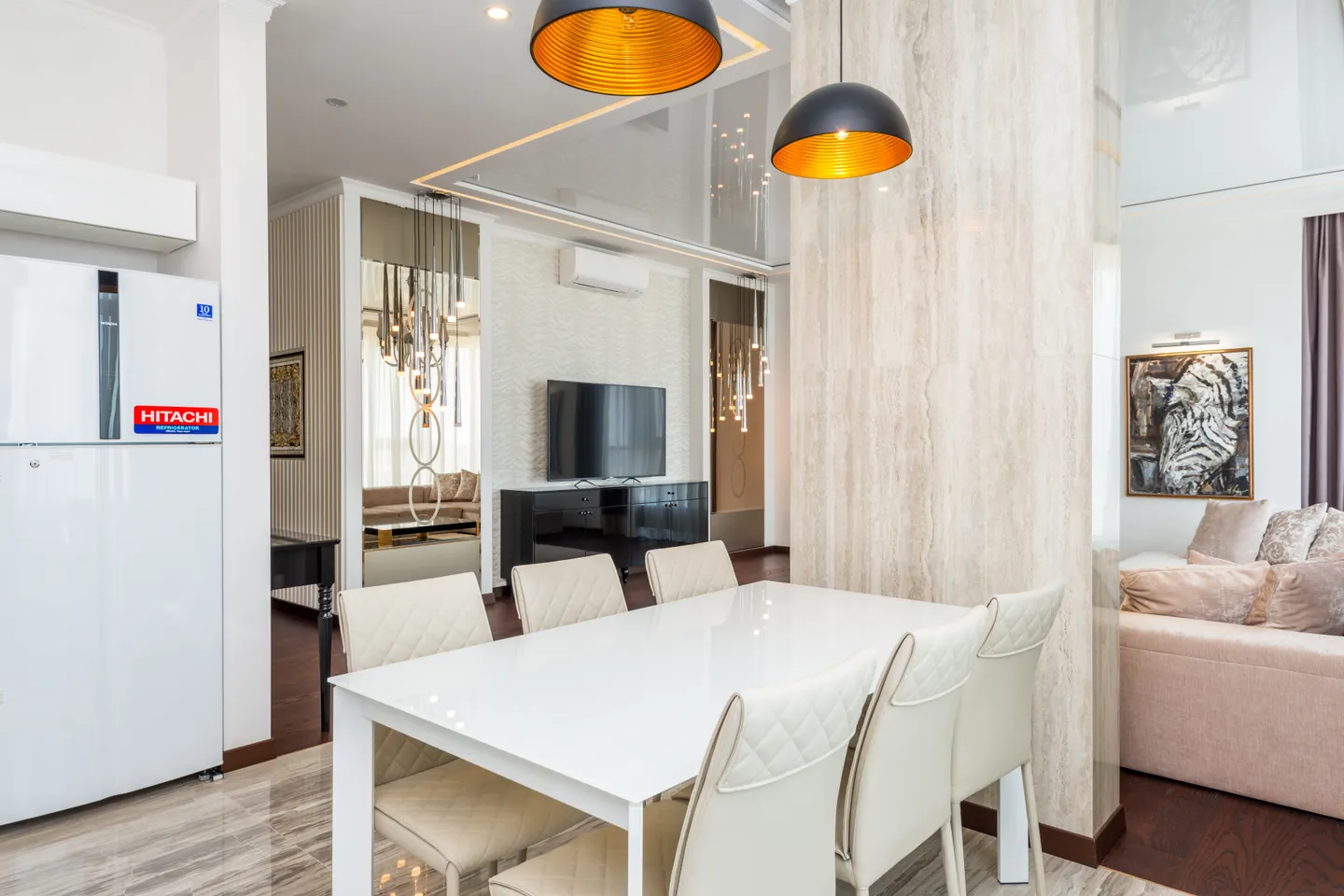
The easiest place to judge a dining pendant is also the least revealing: standing under it in a showroom. At home, the familiar view is from the opposite side of the table. A bulb hidden at standing height may shine straight into the eyes of a seated diner, and a shade that looks broad in a shop may leave the ends of the table in shadow. A good pendant lets people see food, faces and the object on the table without drawing their eyes up into a bright source. Its location starts with the tabletop and chairs.
Collect the table dimensions with any extension in place, the height of its top, the ceiling height, the current electrical box location and the approximate eye height of someone sitting in the ordinary chairs. Mark which way each person usually approaches and which view matters from the adjoining room. If the table might move, record its second common position. An arrangement that suits only one centered photograph can become irritating every time you use a table leaf.
Put a cardboard shade in the actual room
Make a lightweight template that represents the height and width of a shade you like. Hold it temporarily at a few candidate positions from a stable place with help, or use a simple lightweight mock-up that can be moved safely. Keep clear of actual fixtures and wiring. Mark the bottom edge with tape on a nearby wall so you can compare your impressions later. Sit in the chairs, look toward someone across the table and imagine the shade occupying that space for a whole meal.
Some pendant shades are designed with a diffuser underneath. Others expose part of a bulb at a shallow angle. A drawing of the outer shade is useful for sight lines but cannot represent the brightness of a bare lamp or the spread of light from an opaque shade. In a showroom, ask to see the fixture lit at your likely hanging height relative to your head. Look again from the position a person would approach the table. If the lamp is visible, ask whether the fixture accepts a specified diffuse bulb or has an optional compatible diffuser.
A lower shade can feel pleasantly close to food, but watch the path on the way to the chairs. If the shade sits fully above the table, the table provides a spatial boundary. A wide or low shade that projects beyond the table edge may sit in the path of someone standing or leaning forward to serve. Where the table frequently moves away from the light, leave safe clearance for ordinary movement and consider another fixture type or mounting location. A hanging fitting should feel comfortably out of the way even before the chairs are put back.
Find out what the fixture lights
An opaque shade can send most useful light down, making the table feel separate from the rest of the room. It may leave faces or surrounding walls darker than expected. A translucent shade can make a gentle glow visible from outside the room, though the material may warm or otherwise change the color of the light as it passes through. A shade with a reflective inner finish can intensify the pool beneath it. Ask to see the light pattern on a nearby surface rather than judging by how bright the fitting appears.
For a long table, set dinner plates and glasses at the far ends and the center. Think about how many people will use each place when the table is extended. One compact circular pendant centered over a long table may leave one end relying on ambient room light. A wider or linear fixture can distribute light along its length. A pair of pendants can work where the source positions and ceiling structure suit the arrangement. Two points of light need to be compared from the usual doorway, where a shift in the table or uneven suspension can be easier to spot.
Use a wider view as well as the table view. With a dark ceiling and walls, a downward beam can make the plane over diners feel especially dim. A lamp on a nearby sideboard or bounce from suitable wall lighting may improve the contrast. In a room open to the kitchen, try the light with the kitchen ceiling fixtures both on and off. The dining light may feel strong relative to a dim kitchen but modest when the sink lights are on. A pleasant balance need not involve placing every fixture on the same control.
Evaluate glare, brightness and color separately
Look directly across the table in the proposed arrangement. A light source is more glaring when it appears very bright against darker surroundings. A material that makes the bulb less visible or spreads the light can improve the view without making food harder to see. Some tabletops reflect a direct image of the bulb. Test with a similar lamp over the table from a safe temporary setup or look for a showroom display with a similarly glossy surface. A matte tray can help on some occasions, though the fixture should be comfortable during ordinary use.
Read the fixture documentation together with the bulb or integrated light specification. Use the allowable lamp type and power, and confirm compatibility with dimmers, if needed. Compare brightness and color using the instructions and specifications, then see the light in a sample room where possible. A lower color temperature tends to look warmer. Color rendering and the shade itself affect what tomato, fabric or wood looks like beneath the light. Choose the appearance that feels natural to you with the other lamps normally on at dinner.
Try three everyday scenes: sitting together for a meal, spreading work or homework on the table, and getting a glass of water with the rest of the room dim. The table may need more light for one of those activities. A compatible dimmer can be helpful if the adjustable range remains useful and the fixture operates smoothly. Check whether the proposed system handles low light without flicker or buzz. A separate task lamp or brighter nearby fixture may be the simpler answer if one person uses the table for detailed work only occasionally.
Align the table and the fixing point before buying
An electrical box may be centered in the room while the table is centered in the square of space left between a sideboard and a route to the kitchen. Draw those two centers. Check whether the ceiling can support and supply the proposed fixture in its best position. A heavier fitting may require support beyond the existing box. Have the electrician confirm the right method, requirements and hardware before buying. The tabletop can help set the locations, but it tells you nothing about the structure overhead.
In a rental or a room where the ceiling is difficult to change, an existing approved fixture position could call for moving the table slightly or choosing a fitting whose light spreads sideways. A different treatment might be to keep the fixed light for the room and use wall or sideboard lighting for dinner. Check lease terms and keep cords and floor stands out of normal routes. When comparing costs, include any patching and painting that accompany a changed ceiling location. The right fixture is the one you can install properly and keep in working condition.
Check maintenance access with the chairs in their normal positions. Can you reach a replaceable bulb safely after making room for a suitable step ladder? Does the shade trap visible dust or need to be supported by two people during cleaning? Look up the maker's instructions and note whether an integrated light module can be serviced. If the fixture has a complex diffuser, find out how to reinstall it without disturbing the suspension. The best result can be a simpler shade you can maintain over several years.
Make the final adjustment at a real dinner
On a narrow rectangular table with four usual seats, a broad shade may create an intimate pool of light if it stays above the people’s central sight line. A dim nearby lamp can soften the contrast along one end. A round table with a reflective top might ask for a fixture with a diffuser, especially if one chair has a clear view of the underside. Compare the effect from the room entrance and from each seat. Consider whether you can still see a serving dish being passed across the table.
When the fitting is ready to be hung, ask the installer about adjustment and any settling that may occur. Provide the table location and the bottom-edge height you chose after the mock-up. If you can, test the light at the intended time of day before finalizing the position. The sign of a good dining pendant is that the table feels easy to use and the light shows the meal and the people together. The fixture can be a distinct piece in the room without dictating how everyone sits.
If the table has a permanent leaf, measure from both ends after it has been put away. Some extensions leave the center of the tabletop where it was. Others shift the entire usable surface. The difference can determine whether the light feels comfortably centered during the week as well as on occasions.