Furniture
When a Dining Bench Earns Its Place
Use seat heights, table supports, access and actual meal habits to decide whether a bench belongs at your everyday table.
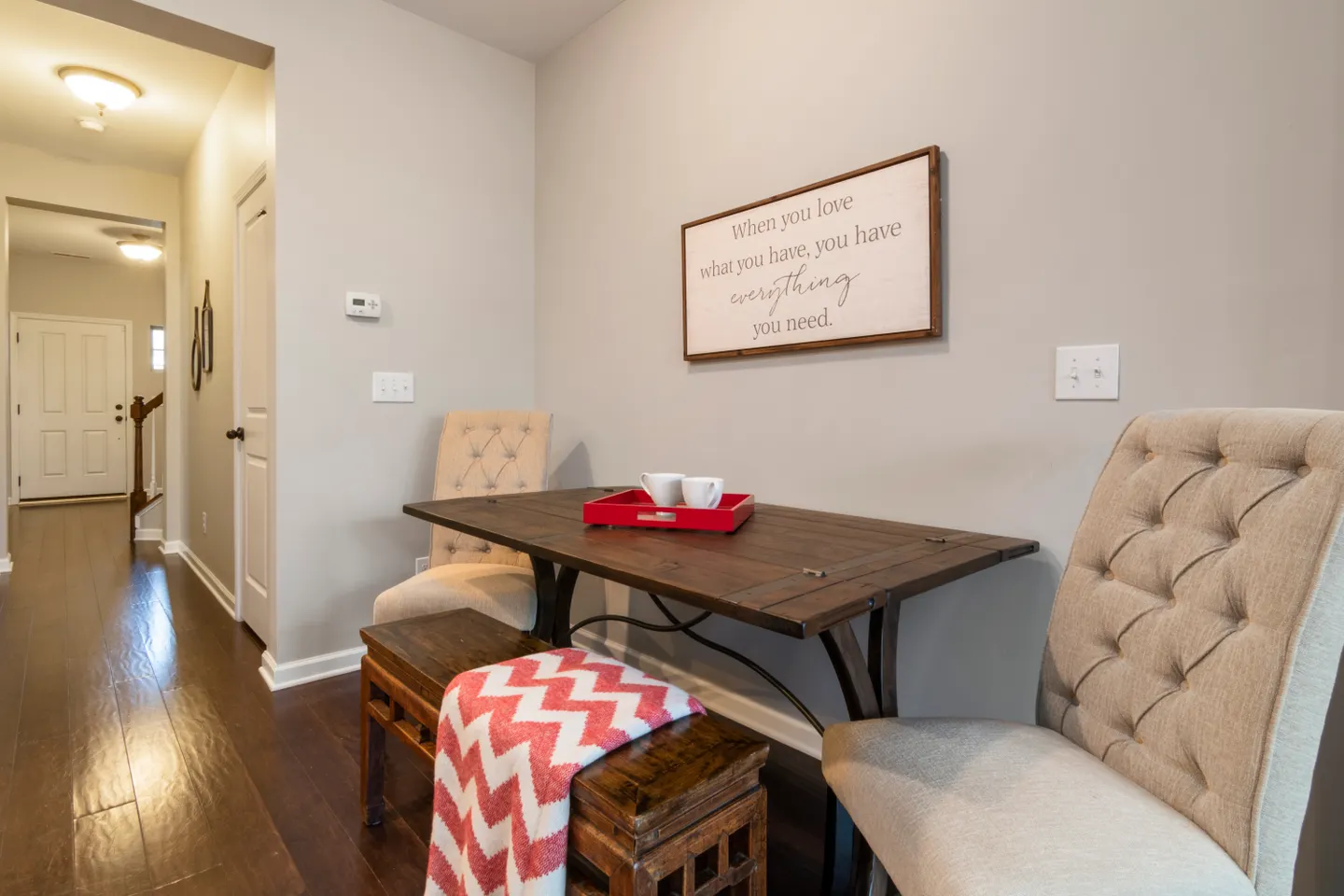
It is easy to take a photograph of a dining bench pushed in neatly. It is harder to photograph the middle diner trying to leave before everyone else has finished eating. A bench solves a narrow range of spatial problems very well. It can tuck deeply beneath a table, hold several small people at once, or give the wall side of a breakfast nook a permanent seat. It can also turn a straightforward meal into a series of sideways movements. Choose a bench by watching what happens around the table when it is in use.
Start by identifying what you want to improve. Perhaps chair backs interrupt the view through the room, the wall side of the table is too tight for chairs to pull out, or spare chairs are awkward to store. Those are three different design problems. A lightweight backless bench, a deep upholstered banquette and a short bench replacing two chairs do different jobs. Think first about the people who use the seat most often and how freely each person needs to come and go.
Measure the seat and the underside of the table
Measure from the floor to the surface where a person sits with any intended cushion in place. Then measure from the floor to the lowest part of the underside of the table where a seated person's legs go. On many tables this point is the apron under the top, not the top itself. The difference gives you a starting point for assessing thigh clearance. A thick cushion changes seat height, and a soft one compresses differently under different users. Sitting at a sample with a surface at the relevant height is more useful than choosing by a single standard measurement.
Pay attention to what happens when someone turns sideways. Chairs can rotate a little or shift out from the table. A bench may ask someone to slide their knees past a leg, apron or stretcher under the table. Put an empty box at the height and position of the lowest obstacle during a temporary test. Test the position at both ends and in the middle with the household members most likely to sit there. Someone wearing a coat while a meal is being set out will take up more room than a person sitting very still in a showroom.
If the bench is supposed to tuck under the table, measure between the nearest inside faces of the table legs. Compare that number with the widest part of the bench, including feet, turned legs or side handles. Measure from the edge of the tabletop to any central stretcher so the bench depth can clear it. A model may fit between table legs and still project too far because the central support stops it halfway in. The bench and the table also need to coexist without contacting each other each time the bench moves.
Understand how the table base governs access
A table with legs near its corners can give excellent interior knee space once everyone is seated. For a long bench placed beside it, the legs near either end may block the approach. The diner has to round a leg, turn and slide along the seat. A pedestal base can open the ends so the first part of getting in is easier, but the support and its feet may occupy the space where a person naturally places their shoes. A trestle design can have similar issues where its uprights and crossbar align with a popular seat.
Make a mock-up with the table you own. A sturdy straight bench or several braced chairs can represent the seat while you see where the obstructions are. Use a safe setup and avoid resting body weight on makeshift boxes. Have people take their usual places, including a diner arriving late. If a chair usually serves someone with limited ability to slide, pivot or stand, retain a reliable independent seat for them. It is perfectly reasonable to use a bench on one side and chairs or an armchair elsewhere.
Where the bench sits against a wall, confirm whether the table can move slightly to let the first person in. Some people use a fixed table position and leave enough end space for access. Others pull the table out and return it after the meal. Both are possible if the floor, table weight and surrounding spaces allow it. A table whose movement scrapes a floor or blocks an adjacent door is unlikely to remain easy to use over years.
Choose the depth with bodies in mind
A narrow backless bench can be pleasant for quick meals, especially if it lets a sitter keep both feet planted. Deeper benches offer extra room for a cushion and a backrest. A deep seat without a back may encourage someone to lean forward for an entire meal. Compare the position when reading or talking with the position when cutting food at the table. If your feet are planted only when you perch at the front, measure the usable depth rather than the full depth of the frame.
For fixed seating, estimate the space taken by a back cushion before choosing where the table goes. On a very deep seat, the cushion may fill the rear and bring the seated person forward toward the table. A sloping back changes the angle of the upper body. An upright seat often takes less floor depth, but it may be uncomfortable for long meals. A maker can offer sketches with useful seat and table dimensions, and a temporary mock-up can expose a problem a drawing misses.
Allow some uncrowded space for arms when setting the places. An adult seated in the middle has people on both sides, so the usual test of how many hips fit in a line can overstate how comfortable dinner will be. Put out actual plates, cutlery and water glasses. Eating a quick snack is one trial. A meal with shared dishes in the middle is another. Keep the shorter table side clear if a person needs to step in and serve from there.
Decide whether storage and upholstery will be used
A lift-up bench lid can be appealing in a small room. Consider what has to happen to retrieve the contents. If the top is under the table, you may have to move the table or pull the whole bench out. A continuous seat cushion may cover the lid and need to be removed. Drawers can be easier for everyday table linens if there is a reliable clear path to open them. For occasional items like spare placemats, a lid that takes a minute to reach can be an acceptable trade.
Choose an upholstery construction that matches cleanup. A wipeable seat with well-treated edges can be practical near young diners. A removable textile pad may be comfortable, but verify whether the whole pad or just its cover can be cleaned per the maker. Check any ties or fasteners, because a pad that slips during normal sitting can make the seat feel precarious. If a wooden seat is used without upholstery, precision matters at the front edge. Try the actual profile with your feet on the floor and see where pressure falls.
A sliding bench will leave marks if the feet and floor are incompatible. Choose floor protection that fits the feet securely and is appropriate for the flooring. Avoid relying on a loose rug to keep a bench from slipping. It can move as people get up and down. Check whether the table can be cleaned around the bench with it in its parked position. An arrangement that means lifting something heavy each time a spoon drops will feel quite different after a week.
Compare two uses of the same footprint
In a breakfast room with a short wall and only one everyday route in, a compact bench along the wall may preserve the walking side. Give the wall end a packing and testing period. Park a stable temporary seat, mark the proposed table position and see how far the corner diner has to slide to take a place. If the same person likes sitting there and usually leaves last, the slight inconvenience has a manageable cost. Consider a short movable bench if there are only two ordinary diners on that side.
A dining room that also serves as a work area asks for more flexibility. A backless bench may tuck fully away during the day, leaving space for a supportive chair to face a laptop. Measure where the bench can be pulled out without blocking the room when extra diners arrive. If it needs to be moved across the floor every day, check whether it is easy to grip, which way it can turn and where it can safely be placed away from the table.
Before making the final choice, eat a meal using the mock-up and ask every diner what happened when they came in, sat down and left. A table that looks better with the seat tucked in is a nice outcome. The more durable improvement is a set of places people can settle into and leave without planning the movements of everyone around them.
If you intend to use cushions only occasionally, repeat the trial on the bare seat. A removable pad needs a place to go at the end of the meal, especially if it has to dry after being cleaned.