Decorating
Size a Living Room Rug Around the Furniture You Use
Choose a rug using leg placement, routes, floor edges, pattern scale and thickness in a real living room layout.
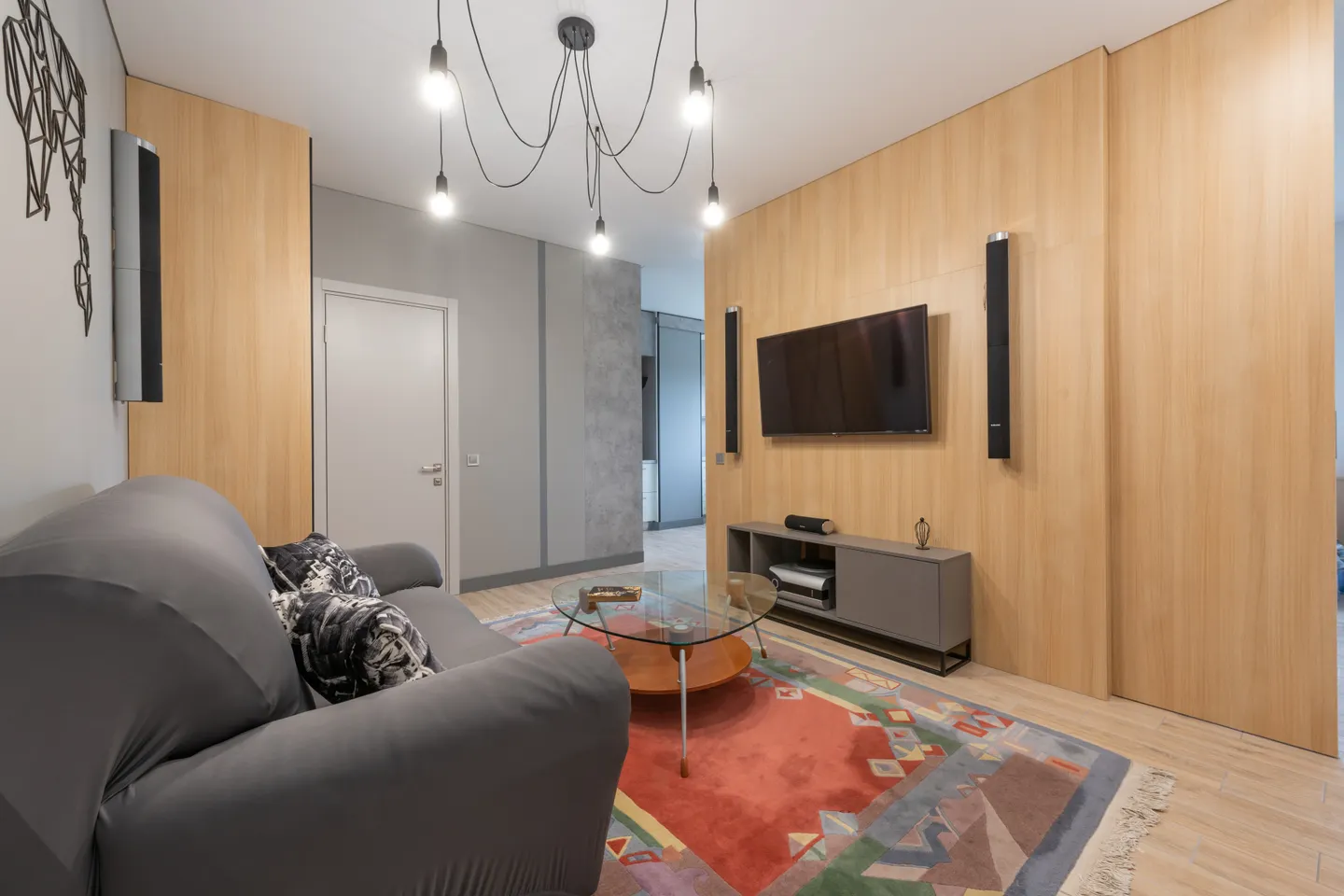
A living room rug has two visible edges: where its material ends and where the furniture stops treating it as part of the seating group. When the second edge is much farther away than the first, chairs appear to stand around a small island no one uses. When both edges are too close to a doorway, a person steps across them every time they go out. The most useful rug connects the seats visually, leaves an intentional border and stays comfortable where people cross it. You can work out all three conditions with tape, chairs and a few minutes of ordinary movement.
Record the furniture before considering standard rug sizes
Draw the sofa, chairs and side tables as they sit now. Include the outer edges of their backs and arms, and add the actual locations of the feet rather than assuming they coincide with the outline. A wood-framed chair can have legs well inside the seat, while a cabinet-shaped sofa puts its weight along a thick low base. Measure the gap between outer seat legs, and the distance from those legs to the end of the sofa. Mark nearby openings, the walking route through the room, and any floor vents or electrical covers that need to stay available.
Identify the chairs you move. A swivel seat turns without leaving its position but may need a base entirely supported by the rug. A little armchair that gets pulled up from another corner needs a route across the edge. A chair with angled back legs can make a rug feel small when moving it even if its front legs look well positioned in a picture. Keep a stable arrangement for the seats used regularly and give occasional seating its own place. Recreate the usual evening layout before measuring because decorative styling tends to group chairs more neatly than ordinary use does.
Compare all legs, front legs and a central rug
An all-legs arrangement puts the entire seating group, including chairs and sofa supports, on the rug. It often works well for a group floating away from the walls. Leave enough rug past the outer feet so an accidental shift of a chair doesn't put it half on and half off. The border beyond a sofa may be mostly unseen, but it still matters if people enter from behind or clean along that edge. A large rug may also bring that edge up to a door or a storage unit. Use an outline to check its far side first. This arrangement is usually the most demanding of floor area.
A front-legs arrangement can bring the group together without covering much of the floor behind it. Place both front feet of the sofa and each relevant chair securely inside the rug. Set them far enough in that the edge doesn't catch at the same spot every time furniture moves during cleaning. Check what the thickness and pad do to the seat's angle and stability. A deep rug and a lightweight rocking seat can make an awkward pair if they are only partway aligned. When a sofa has no visible legs, think about where its base bears weight and whether the product instructions allow a portion to sit higher. Try an existing blanket or rug of similar thickness under a stable setup before you buy.
A smaller rug under the coffee table can work where furniture fits close to it and an open perimeter serves several doors. It is a different effect from connecting the seats. Choose a size big enough to sit comfortably within the composition and leave its raised edges out of the main stepping area where practical. A large gap between its edge and every seat can make its shape look isolated from the room. If that is the only way a particular rug fits, take a photo and see how it looks from the entry. You may like the floor showing. A different rug shape, simple cushion colors, or a broader table can sometimes bring a coherent appearance without adding a larger rectangle.
Tape the likely sizes in place against actual paths
Common retail sizes vary, and room needs rarely land precisely on one of them. Start by outlining the long axis of two options, leaving tape down only as long as the flooring surface safely allows. Use removable paper strips or fold a spare cover where delicate floors make tape unsuitable. Measure the tightest border, especially at a bay window, sideboard or fireplace. Look for comfortable access to doors, radiator valves and ventilation. If a rug will be very close to a hearth or heat source, check applicable clearances and the equipment or material guidance before giving it a place in the plan.
In an illustrative arrangement, an 84-inch (213 cm) sofa plus a pair of compact chairs might connect nicely across one 96-inch (244 cm) edge. That leaves a nominal 6 inches of rug beyond either end of a centered sofa, but the legs, table and chair orientation decide whether it looks balanced. Rotating a rectangular rug can add useful width under the seats and reduce the depth it reaches toward the next room. Test the same layout with one chair slightly forward. A usable rug should support an evening in which somebody pulls that chair over to talk. It should also leave a good route past anyone putting their feet on an ottoman.
Take this trial one step further. Sit in each chair, lean toward the table, set your feet down, and get up. Trace where your heels land and where the rug edge would be. Walk between the nearest room entrances and open the door to its usual extent. Fold a towel or use a small sample under it to approximate total thickness if the point is safely arranged for the test. A mat that just clears an open door under one condition may still interfere when the backing or binding lifts slightly. Try full door travel and make sure you have access for lifting the rug when cleaning.
Judge the border from several ordinary positions
A room with a clear continuous flooring edge often looks settled when its border runs at a similar distance from comparable walls. A very different wall or room opening can justify a different depth. Use the main sight line, typically from an entrance or a nearby hall, to decide which alignment feels most natural. A rug lined up solely with the walls may seem to ignore an angled sofa and two chairs. Lined up solely with an odd sofa orientation, one corner may look mistaken. Compare a slight realignment of the furniture before giving up on the best standard size.
Pattern size can matter as much as the overall size. If the rug has a border or a strong central feature, sketch it within the taped outline. A coffee table might obscure the area that most attracted you to the piece. An elaborate edge may be visible mainly as a narrow stripe beneath the couch. Try pricing another size with the proposed pattern repeated rather than enlarged. Look at the rug on a small scale and from a picture taken from standing height. Decide what you want to register first: a quiet field bridging the furniture, a specific motif, or a band of color at the group’s edges.
Test comfort, thickness and the cleaning plan
Examine samples with bare feet and from standing height. A thick cut pile may be pleasant under a seated person while making a rolling base difficult to move. A thinner woven rug can suit a busy route if the edge and pad behave on the actual floor. Check what cleaning the material permits and whether a vacuum head can adjust to the pile or fringe. The Carpet and Rug Institute's care guidance distinguishes fringe and area rug cleaning considerations. Confirm the maker's directions for the exact product. Choose a pad and placement suitable for the rug, floor finish and room conditions.
Consider the smaller chores. A rug that needs several people to lift is a different commitment from one you can turn yourself. Make sure its proposed size can be carried in and opened while the furniture is movable. Ask if a strong directional pile will change appearance under the living room's light, and rotate a sample to see whether somebody will take the effect for damage. A pad that fits the rug without extending beyond it can improve stability and may need trimming according to its instructions. Look at both under a rug sample rather than buying the pad from a dimension alone.
Keep a sketch with your reason for choosing the size
Write the selected finished width and length on your floor plan, with a rough outline of the border or orientation of the pattern. Add the distance to the busiest door and the amount of rug you want under the principal seats. If you later find a different size on sale, use those details to spot which constraint changes. An extra foot on the side near the hearth may make the product unworkable, while the same difference under the sofa might be barely visible. Check actual dimensions and placement as soon as the rug arrives, and adjust feet or layout before habits push it out of position.
One evening with a correct rug should feel ordinary. Chairs stay where you expect them, there is room to place a glass down, and nobody takes an awkward step near the door. Save this as the useful test after enjoying the pattern. It will help you distinguish a piece that looks lovely in a product image from one that makes your particular room easier to occupy.